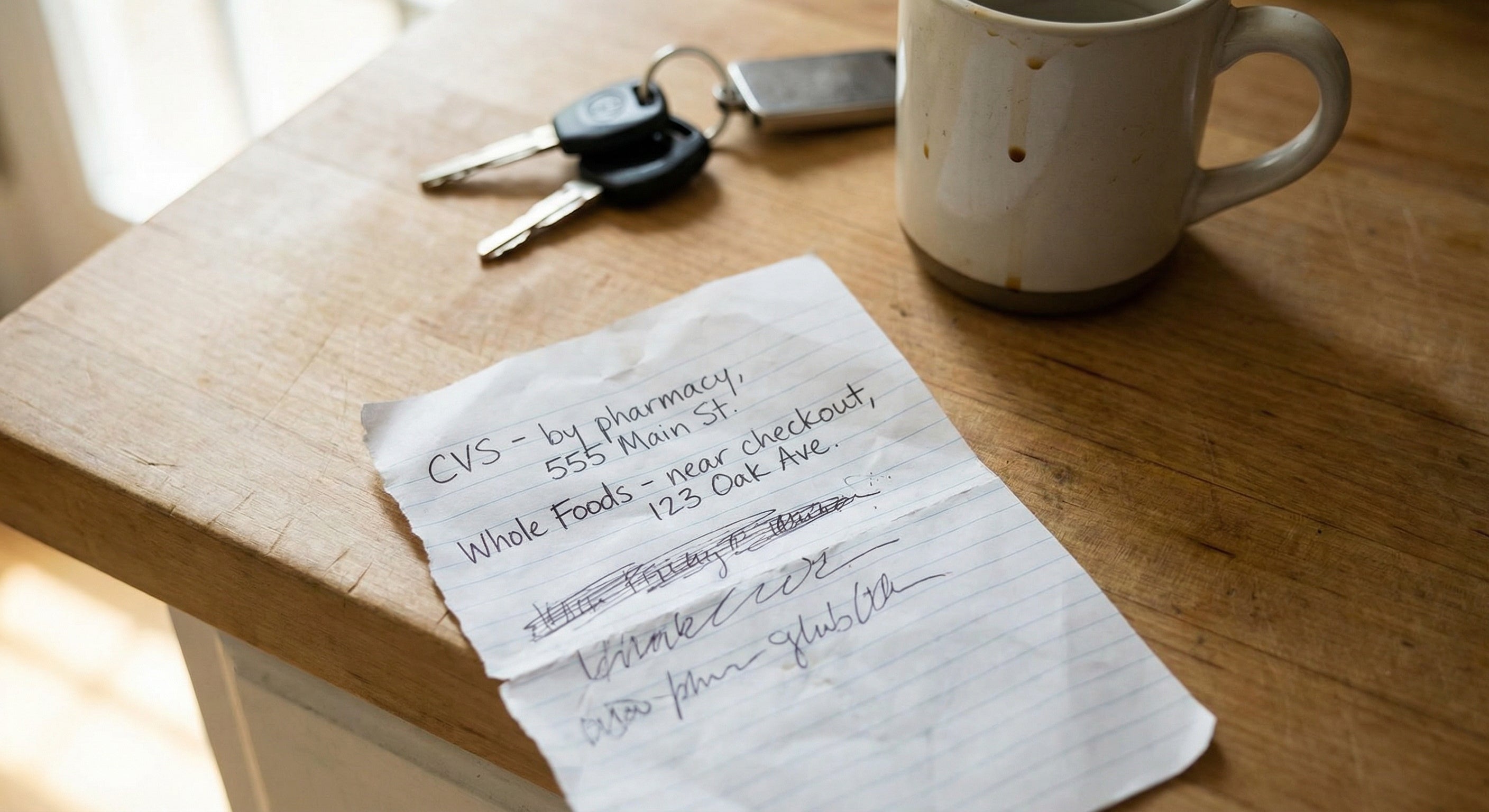
My bench map. I carried this in my wallet for three months.

By James Mitchell | January 28, 2025
Chronic pain didn't just hurt my back. It stole my freedom and turned me into someone who planned every trip around where I could sit down.
My bench map. I carried this in my wallet for three months.
Millions of people deal with back and hip pain every single day. But nobody talks about what it really costs you. It's not just that it hurts. It's what it does to your life.
Going to the grocery store becomes a mission you have to plan. You start thinking about chairs everywhere you go. And slowly, you lose something you never thought you'd lose: your dignity.
That photo above? That's real. I kept that list in my wallet for three months. CVS by the pharmacy. Whole Foods near checkout. Every place I knew I could sit down.
I'm telling you this story because I lived it. And because I found something that helped me stop living this way.
I was in the grocery store, standing in Aisle 4. Just staring at the floor.
I wasn't looking at coffee or checking prices. I was counting how many steps it would take to get to the bench by the pharmacy.
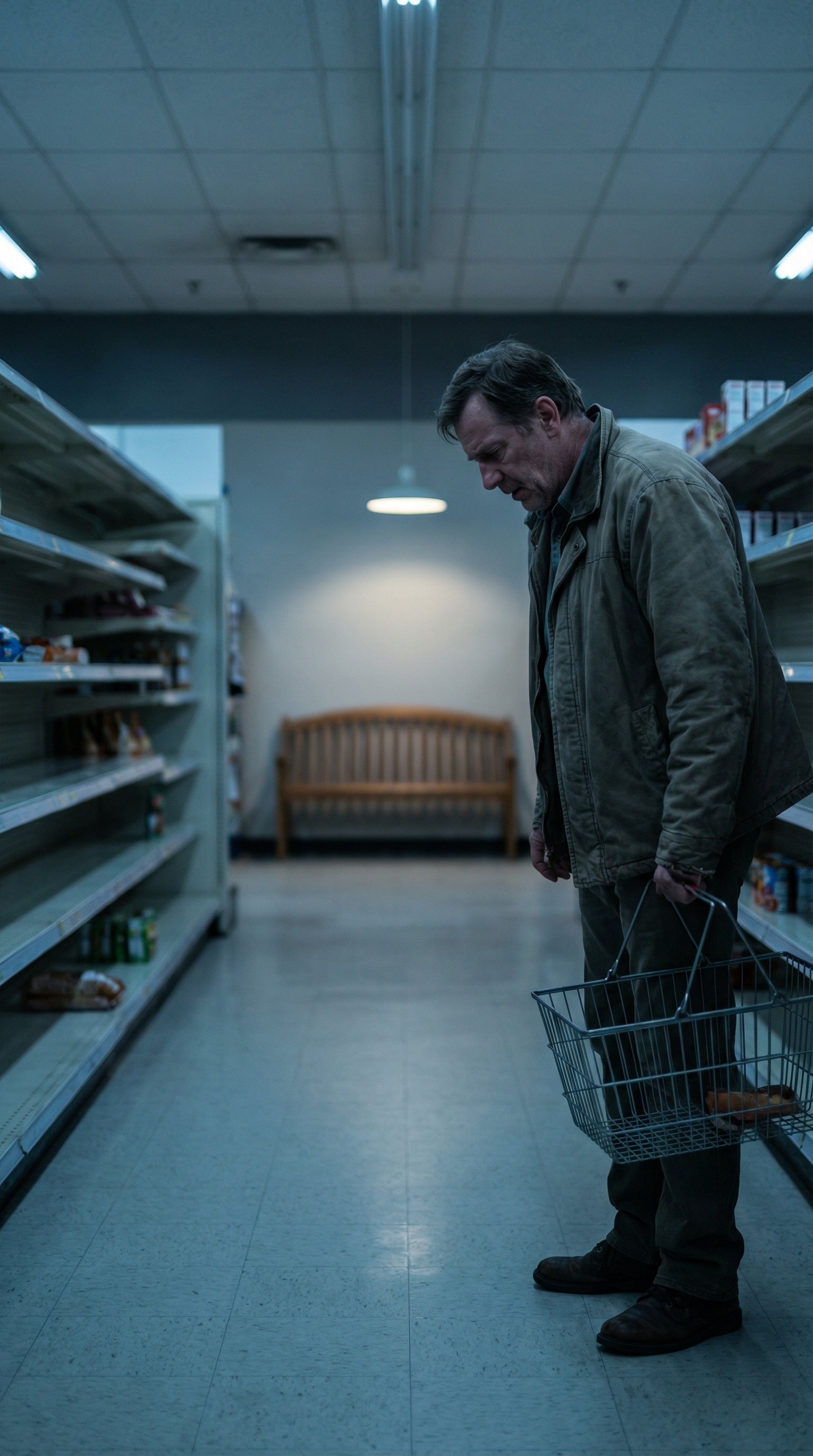
Every trip became about finding the next place to rest.
I'm 59 years old. In my head, I'm still the guy who used to run 5Ks. The guy who built things on weekends. But standing in that store? I felt like I was in enemy territory.
My whole world had gotten smaller. It was now just the distance between my front door and the nearest chair.
People can't see it. There's no cast or cane. No wheelchair. Just a guy who looks a little stiff. But inside? I felt trapped in my own body.
The pain wasn't even the worst part. The worst part was sitting on my bed one morning, waiting for my wife to tie my shoes for me.
My New Balance shoes were right there. But I couldn't bend down to reach them.
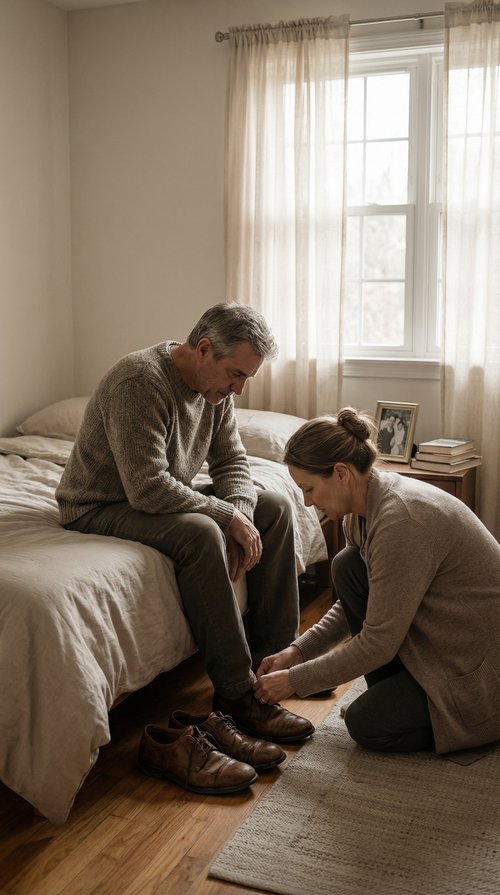
The moment I realized what I'd lost.
I'm supposed to be her husband. Her rock. And there I was, stuck looking at my own feet.
That's when I understood: This wasn't just back pain. I was losing my independence.
I did everything they tell you to do. Went to doctors. Saw specialists. Did physical therapy.
Some young physical therapist told me to "work on my glutes." I could barely stand up. The chiropractor would help for 20 minutes. Then by the time I hit the first red light driving home, my back locked up again.
Then I heard the line that crushed me: "You're getting older. Just lower your expectations."
I didn't want to lower my expectations. I wanted to walk my daughter down the aisle next June without looking like I might fall over.
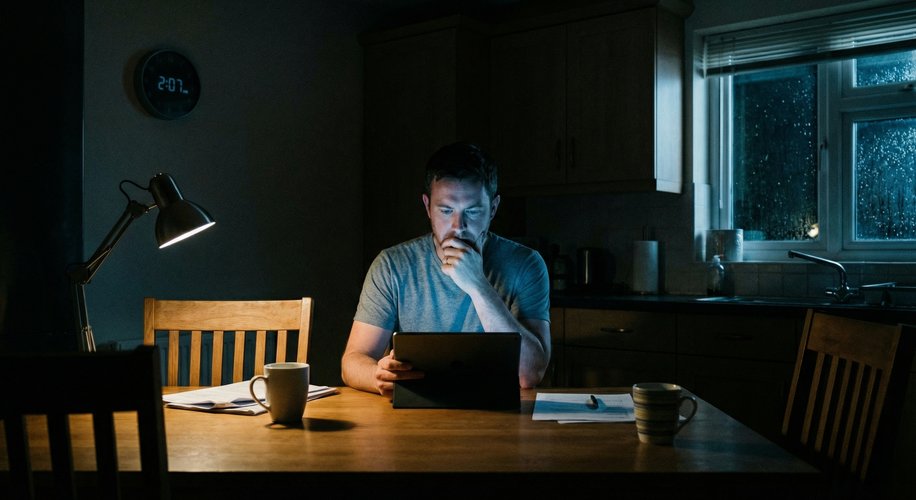
The night I finally found answers.
One night—September 14th, 2024—I woke up at 2:14 AM. Couldn't sleep. House was cold. I grabbed my tablet.
I had one question on my mind: "Why does nothing work?"
I wasn't looking for stretches to try. I was looking for what I was missing.
That's when I found an old study from some Swedish clinic. It wasn't trying to sell anything. Just research. And there was one phrase that stopped me cold: "The Paralysis of Protection."
Here's what I learned. Most advice treats pain like it's just a body problem. Tight muscles. Bad discs. Weak core. And that's part of it.
Think about walking on ice. Your body tenses up so you don't fall. That's good for a few seconds.
But after years of pain—sitting at work, driving, lifting things wrong—your brain forgets how to turn that tension off. So even when you're resting, your brain is still sending the same message: Stay tight. Stay locked. Stay protected.
And here's the kicker: When you try to force your body to relax—with hard stretching or aggressive adjustments—your brain sees that as a threat. So it tightens up even more.
That's why the relief never lasts. You're trying to open a locked door. But you don't have the key.
This is going to sound weird. But when I read this, everything clicked.
My brain had what they call an "open loop." It never got the message that said "You're safe now." So it just kept the alarm going.
It's like when you can't remember if you locked the front door. Your brain keeps bugging you about it. Pain was doing the same thing to my body. Keeping it on guard 24/7.
I didn't need more force. I needed to tell my nervous system: "Hey. You're safe. You can relax now."
The study said there were two things my body needed.
1) Zero-Load Position — Not just lying down. A specific angle where your heart and knees line up. Where your spine isn't being crushed by gravity anymore.
2) Unpredictable Touch — Cheap massagers do the same thing over and over. Buzz buzz buzz. Your brain figures out the pattern and locks up again.
But when the touch keeps changing—slow, then deep, then different spots—your brain can't figure it out. And when your brain can't predict it, it stops fighting back.
That's when real relaxation happens. The study called it "giving in." Your body finally believes it's safe.
Look, I was skeptical as hell. But I sat there thinking about my life. The bench map. Not being able to tie my shoes. Being scared every time I left the house.
And I realized something: I was already paying the price. Every single day.
So I tried something built around those two things: Zero-G position plus changing motion. The one I got was called the Osaki DuoMax. I didn't buy it because it was fancy. I bought it because I needed my independence back.
I sat down and pressed the Zero-G button. At first, my body did what it always does. It tensed up.
Then the rollers started. But they didn't move like a machine. They'd press... then stop... then shift to another spot... slow down... speed up... change completely.
My brain couldn't figure out what was coming next.
About 10 minutes in, something happened. It wasn't a crack or a pop. It was mental. My chest loosened up. My breathing got deeper. It felt like someone took a heavy jacket off me.
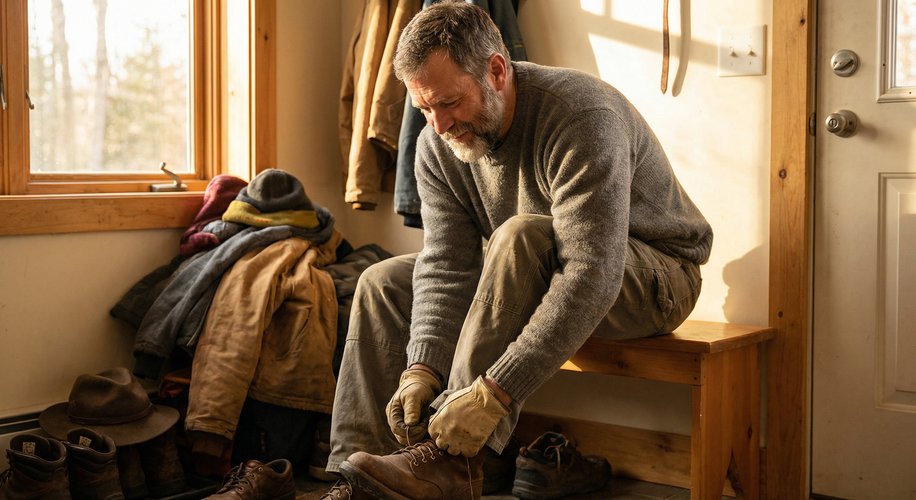
Getting my independence back.
Later that night, I was in the mudroom. I sat down on the bench. Leaned forward. And tied my shoes.
No groaning. No fighting with my back. No calling for help. I just did it.
And I cried.
The biggest change? I don't feel like a burden anymore. I feel like myself again.
"First time in years I stopped thinking about chairs."
"I didn't want something fancy. I just wanted my mornings back."
"My wife noticed the change before I did."
"I wish I hadn't waited three years. Those are three years I'll never get back."
Look, you've got two options here. Option 1: Keep making your world smaller. Keep mapping out benches. Keep waiting for the next bad day. Keep "lowering your expectations."
Option 2: Try something that's actually designed to turn off that alarm in your brain. See if you can get your independence back. Stop living with this invisible handicap. Get back to the life you remember.
If you're dealing with this same thing, if you miss being able to just live your life, you can check out what I used. The Osaki DuoMax is built around this idea—the Zero-G position and the changing patterns.
See Product DetailsShows current price and if it's in stock
loading