
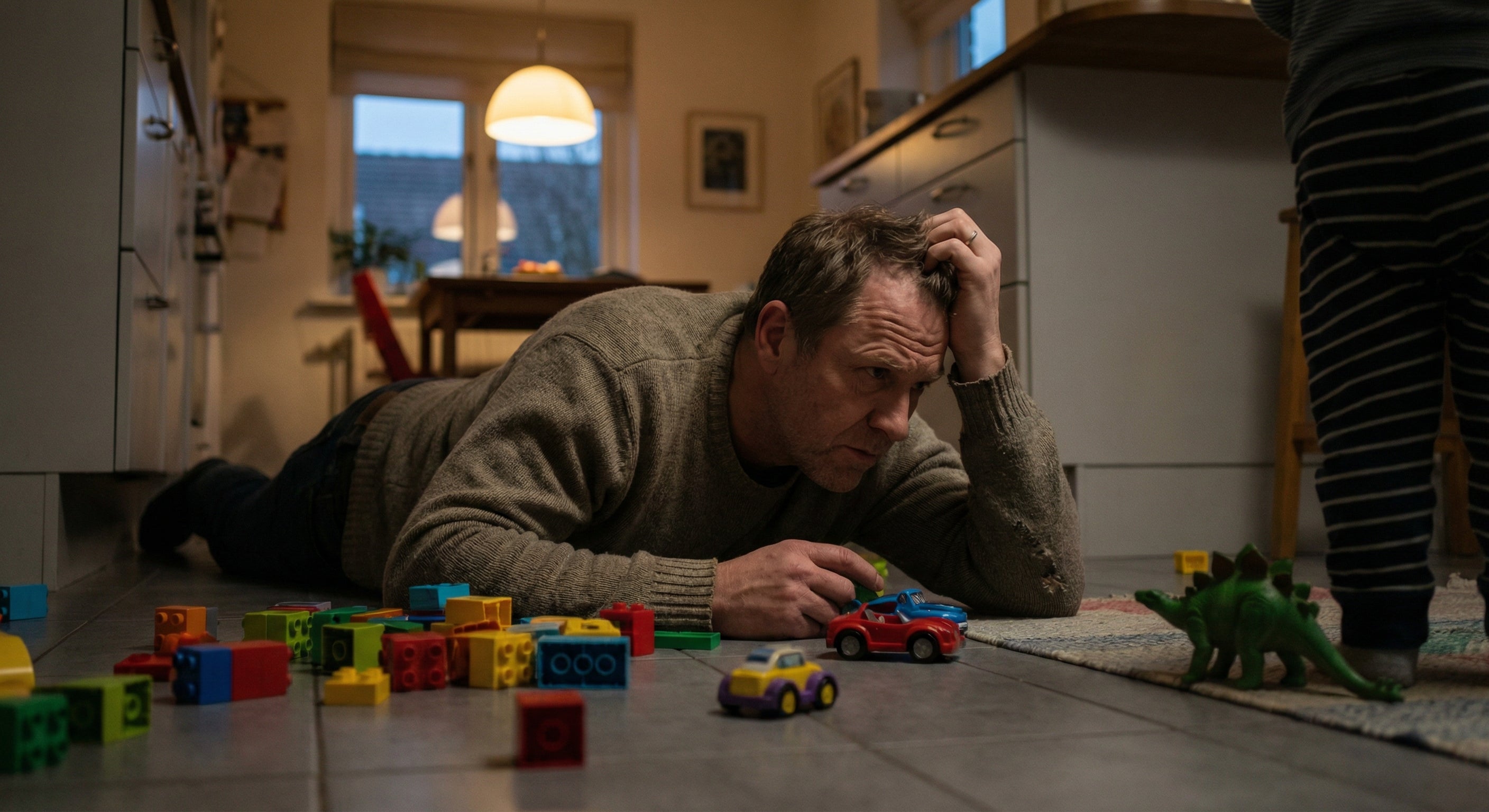
The Tuesday I scared my own kid. He thought he did something wrong.

By James Mitchell | January 28, 2025
"Daddy... why are you always mad?" he asked while I was face-down on the kitchen floor. I wasn't mad. I was trapped.
The Tuesday I scared my own kid. He thought he did something wrong.
Millions of parents live with back and hip pain.
But the worst part isn't the pain.
It's what comes with it:
You get short. You snap fast. You stop playing. You feel guilty… every night.
I'm writing this because I was that dad. The "heating pad dad." The "not right now" dad.
And one strange discovery helped me get my patience back. Not through willpower. Through a missing piece almost nobody talks about.
It was 6:15 PM. I just got home from a ten-hour day.
I walked into the kitchen and saw a Lego on the floor. I leaned to pick it up.
My lower back didn't "hurt." It revolted.
It felt like a metal hook grabbed my spine and yanked. I went down hard.
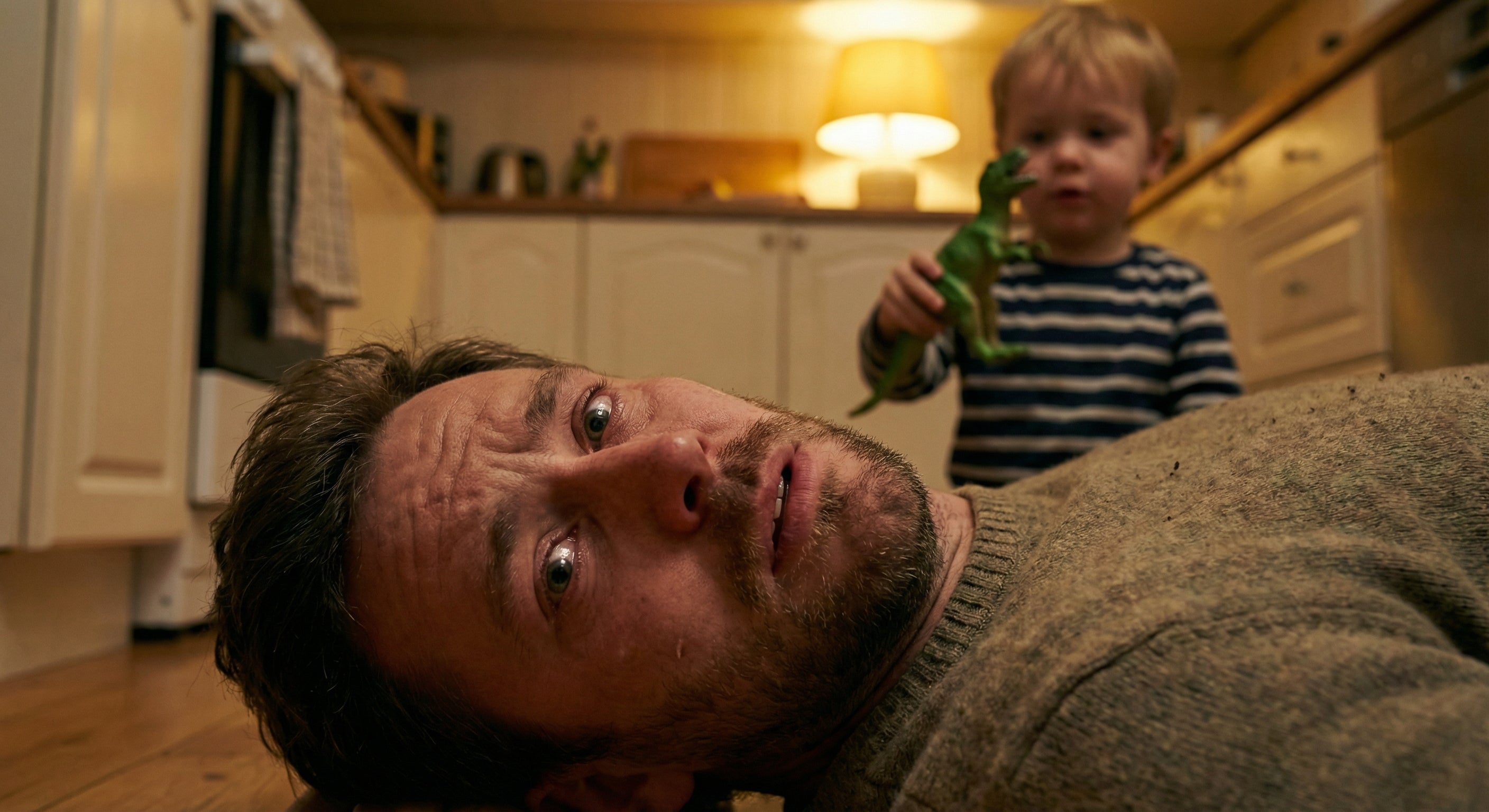
He thought his dad was a mean man.
My son, Leo, was standing there with his dinosaur. He was waiting for the voice I always do. The silly T-Rex voice.
Instead, I snapped.
He froze. His face changed. It wasn't just sad. It was fear. He thought he did something wrong.
I laid on the tile for 20 minutes. The floor cleaner smell was strong. The fridge hum felt like it was inside my head.
And I realized something awful: I was in the house… but I wasn't really there.
Pain makes you do weird things.
You start guarding your body all day. You stop bending. You stop moving. You stop trusting your own back.
So even when you're with your kids... your brain is somewhere else. It's watching for the next hit. The next "pop." The next time you can't stand up.
That was me. I wasn't a fun dad anymore. I was a tense dad. A tired dad. A dad with no room left inside.
I did what people tell you to do. Chiropractor. PT. Stretches. Bands. Planks.
The chiropractor gave me relief for about 20 minutes. Then it was back.
The PT told me, "Your core is weak." I wanted to laugh. I'm a grown man. I've carried my family for years. My core wasn't the real problem.
Something else was going on. Something deeper. Because the more I forced it... the worse I felt.
And the guilt got heavier. Because my kid didn't need a "provider." He needed a dad who could smile.
That night I couldn't sleep. The pain had that slow, hot throb down my leg. So at 2:14 AM, I opened my laptop. I wasn't looking for "top 10 stretches." I was looking for the truth.
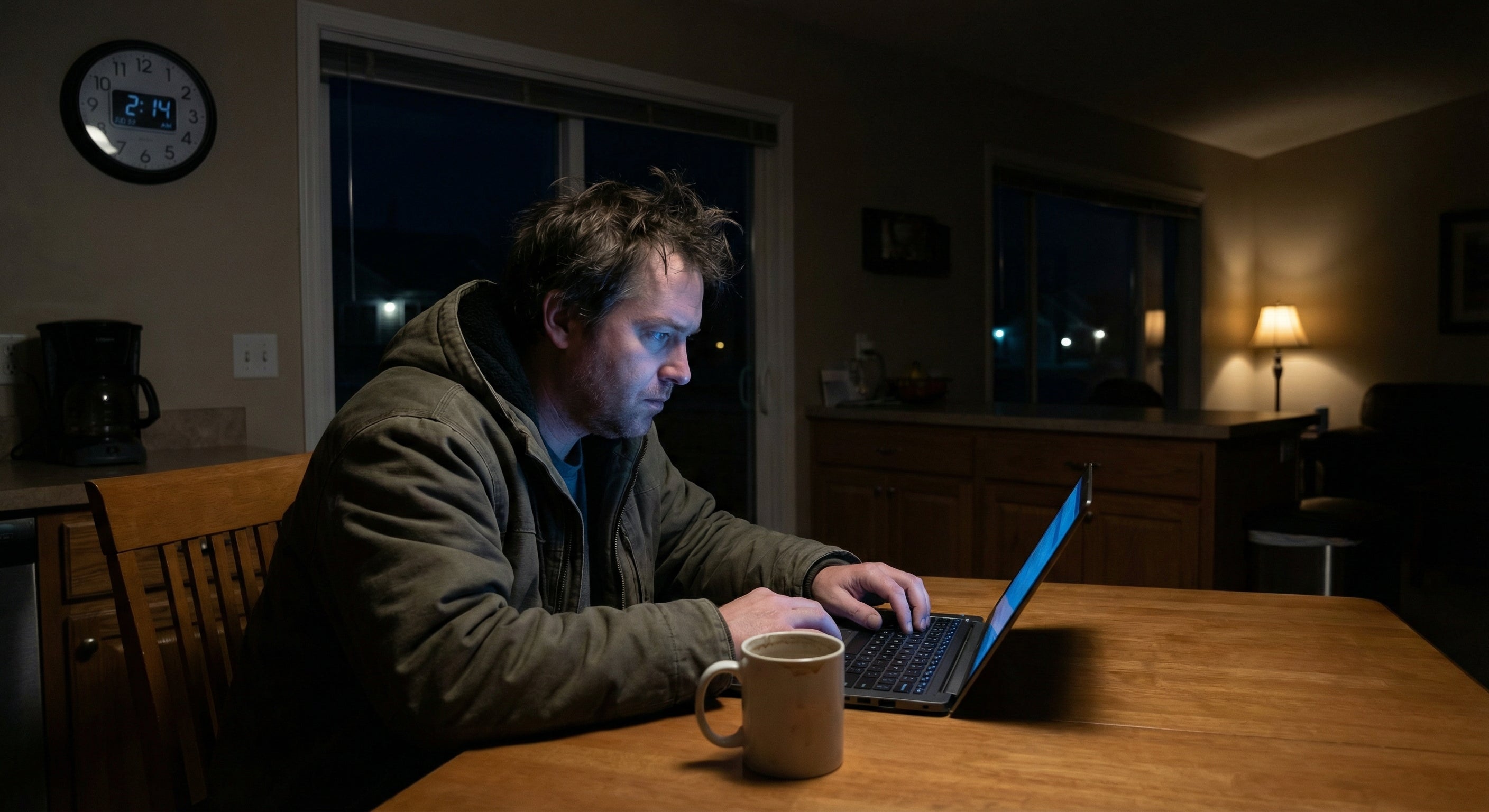
2:14 AM. One question: "Why does nothing stick?"
That's when I found an old paper about something called "Neuromuscular guarding."
That's a big term. Here's what it means in plain words:
99% of back pain talk is about the body. Tight muscles. Bad discs. Weak core. That matters.
Like a car alarm that won't shut off.
When you live under stress for years—work stress, money stress, family stress—your brain starts to treat your back like it's in danger. Even if scans don't show "damage."
So it sends one message all day: BRACE.
It tightens the muscles around your spine. Like a suit of armor. That armor feels like "stiffness." But it's not just tight muscles. It's an alarm.
And here's the kicker: When you stretch hard... or crack hard... your brain can read that like a threat. So it braces even more.
That's why relief doesn't last. You move the bones. But you don't shut off the alarm.
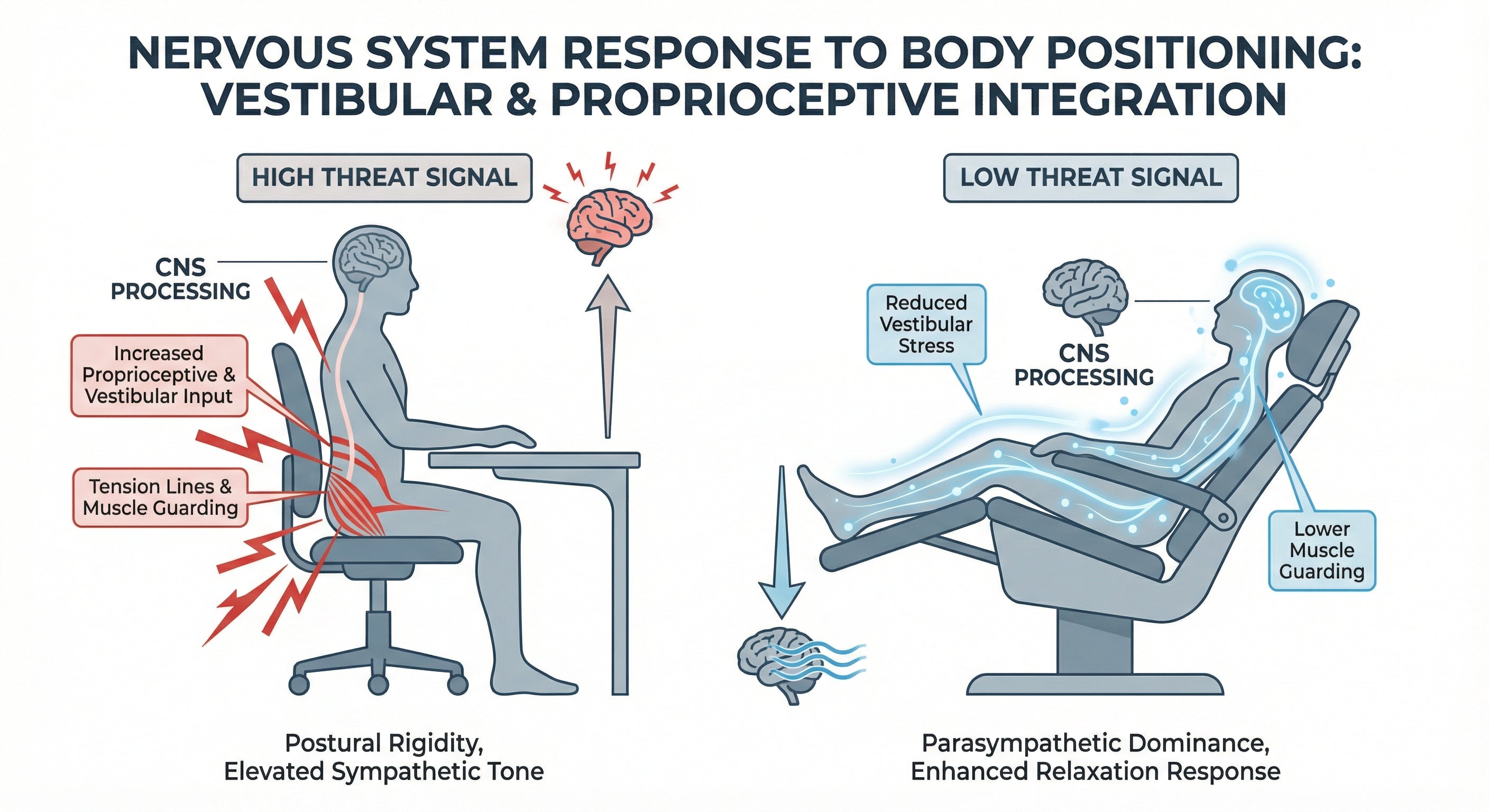
Your brain sending "high threat" signals vs. "low threat" signals
The paper had another phrase: Neural de-escalation.
Simple meaning: You don't "force" your body to relax. You help it feel safe enough to allow it.
And the paper said two things mattered most. This part shocked me.
1) Zero-load position
Not just lying down. A real position where your body feels "unweighted." Where your knees and heart line up. Where your spine isn't fighting gravity.
2) Unpredictable touch
Most cheap massagers repeat the same pattern. Your brain learns it fast. Then it braces against it.
But touch that changes... slow, deep, pause, shift, change rhythm... your brain can't predict it. So it stops fighting.
That's when the body can "let go."
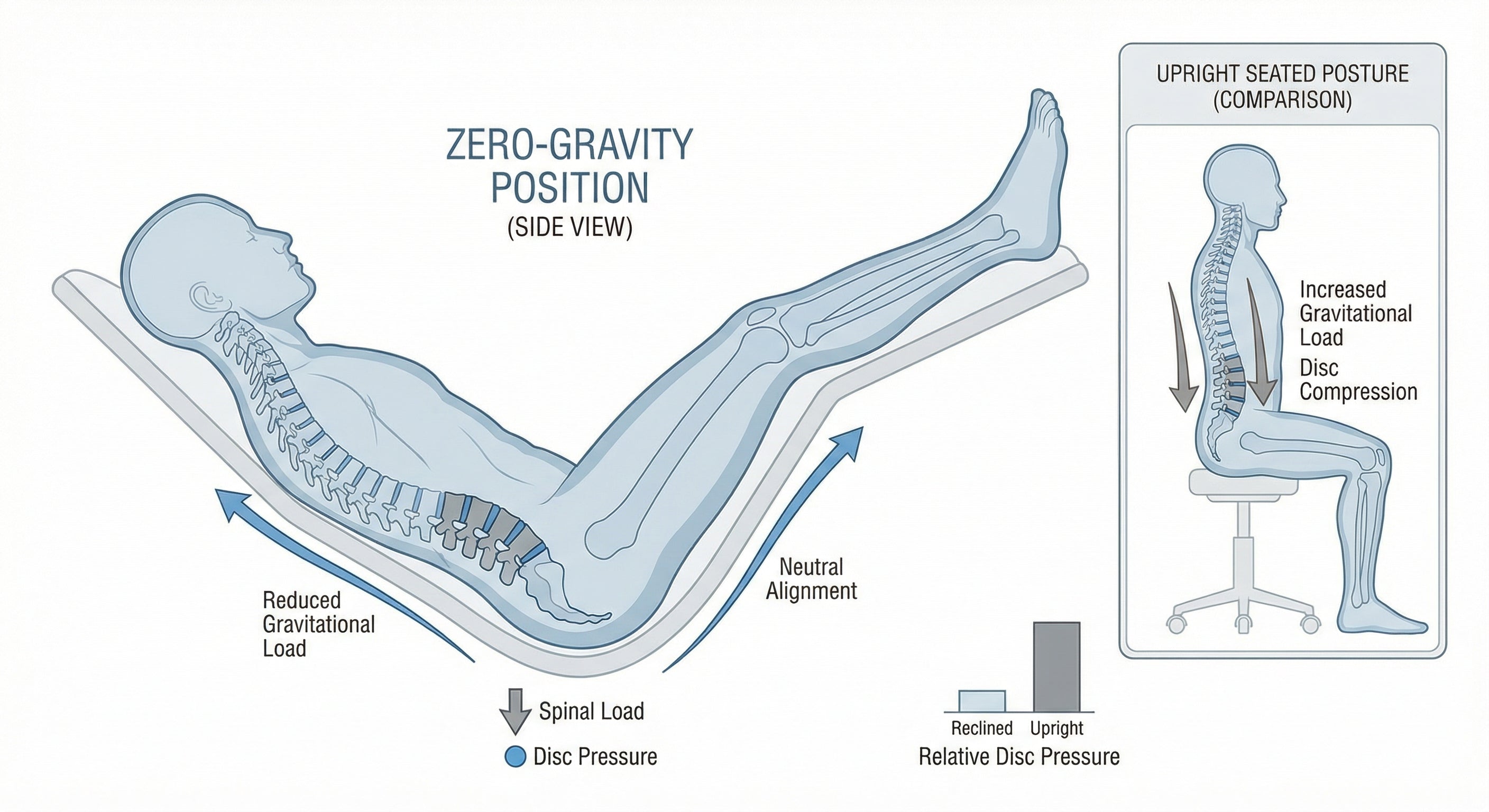
Zero-gravity position: Where your spine stops fighting
I'm not an easy sell. I'm a "show me" guy.
And I'll be honest: Spending money on this felt insane.
Until I did the math.
Plus I was paying with something more valuable: my relationship with my son.
I was paying $80 a visit for quick relief. That's $320/month if you go weekly. That's $3,840/year.
And what was I getting? Temporary relief. Plus a dad my kid didn't recognize.
So I decided to try a system built around those two triggers: Zero-G + variable motion.
The one I chose was the Osaki DuoMax. I didn't buy it as "luxury." I bought it like a tool. A tool to get my patience back.
I sat down. I hit the Zero-G button. My legs rose. My back felt lighter. Not "better." Lighter.
Then the rollers started. But it didn't feel like a machine. It felt... human.
Press. Pause. Shift. Deep. Slow. Change.
My body tried to brace. Then it couldn't.
My chest felt open. My jaw unclenched. And I realized: The alarm was turning down.
Not because I forced it. Because my nervous system finally believed it was safe.
I didn't wake up "cured." I woke up different.
I stood up without that fear rush. I didn't do the old "shuffle" to the bathroom. The pain wasn't gone. But the panic was.
And that changed everything. Because when fear goes down... your whole house feels different.
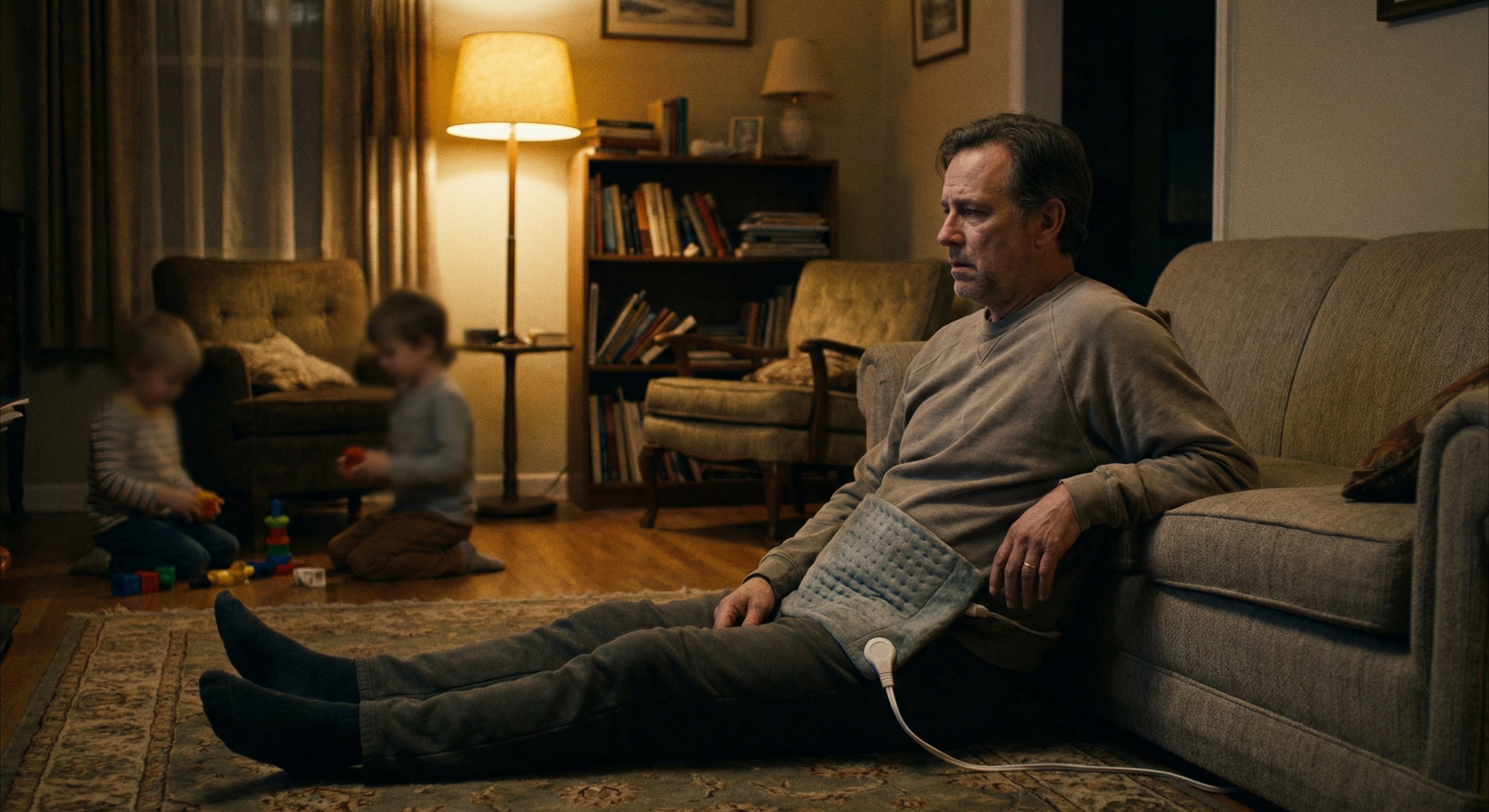
Six weeks later: Present AND available
Last night I came home from another long day. Leo ran up with the dinosaur.
Normally, that's when I'd be tense. Normally, I'd be thinking: "Don't tweak it." "Don't bend wrong."
Instead... I dropped to my knees. I did the voice. We wrestled on the carpet for 20 minutes.
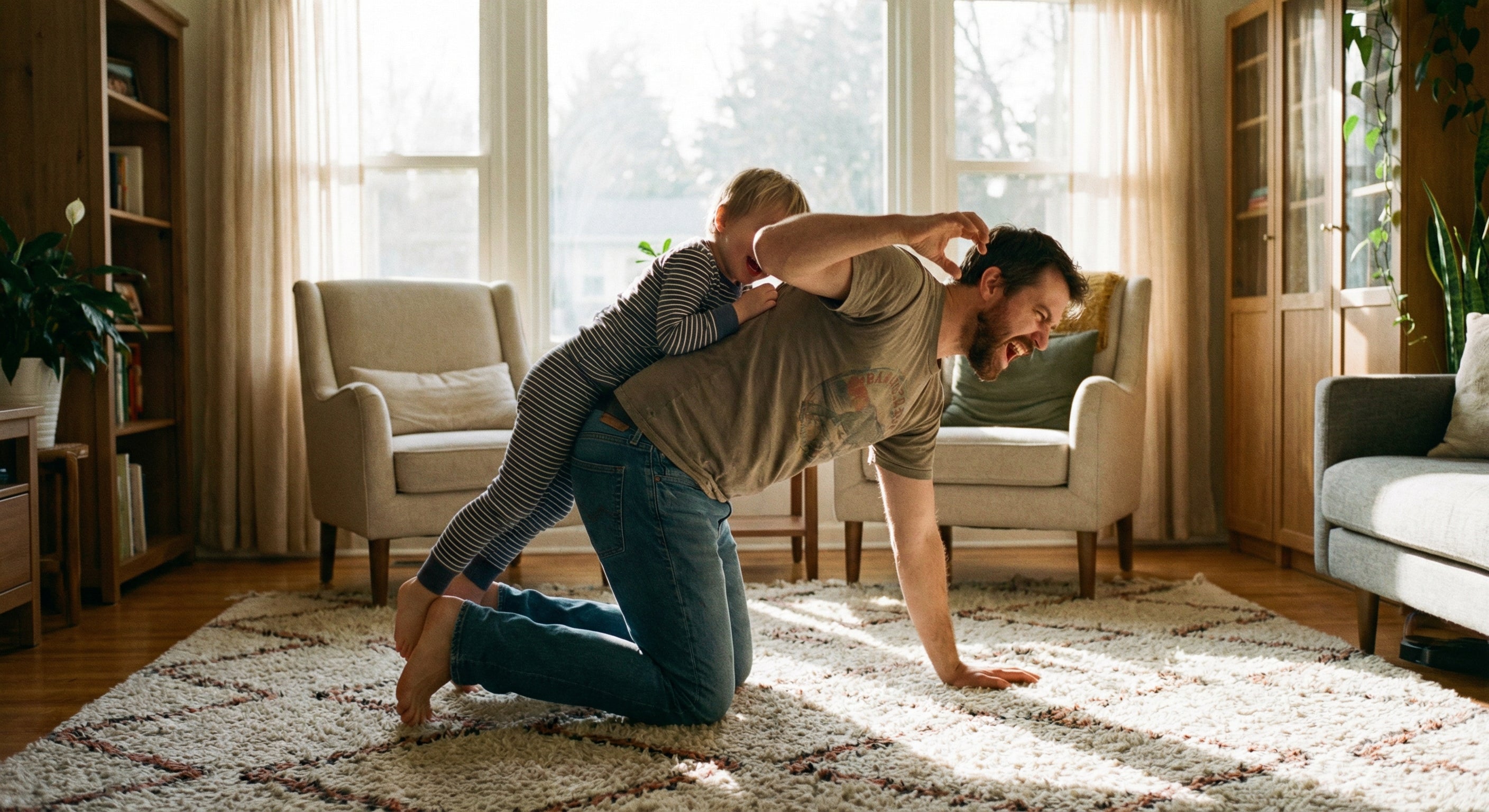
Six weeks later: The dad he deserves.
I didn't snap once. I didn't reach for the heating pad. I was just there.
When I stood up, I didn't feel the "pop." I just felt like a dad again.
"First night I slept without clenching."
"My spouse said I seemed calmer. I didn't even realize how tense I'd been."
"I stopped snapping over nothing. My kids got their dad back."
"Wish I hadn't waited three years. That's three years of being the 'heating pad dad' I can't get back."
If pain is stealing your patience... if you're tired of being the "short" parent... please hear me:
You might not be "weak." You might not be "broken." You might be stuck in guarding.
And the goal isn't more force. It's shutting off the alarm.
Option 1: Keep powering through. Keep bracing. Keep apologizing to your family every night.
Option 2: Try a system built to turn the alarm down. And see if you can come back to your own house again.
I'm not telling you to buy anything. I'm telling you to look. Read the details. See what's included. And most important: Look for the trial/return terms on the page.
That's how I got comfortable taking the leap. If it speaks to you, check availability. Because stock and pricing can change, and some models go in and out.
Check Availability NowView current pricing and return policy
loading